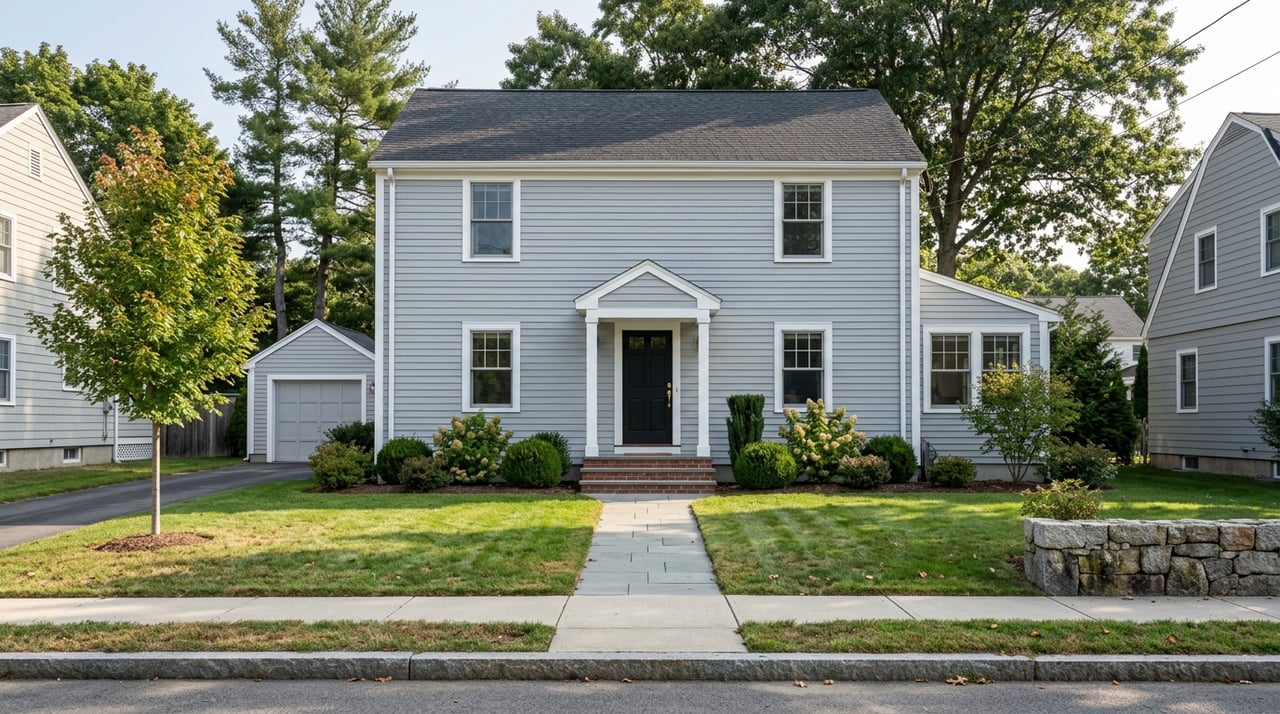
Wondering why two homes in Wellesley with similar square footage can land at very different price points? You are not imagining it. In this market, the street, block, and even lot shape can influence value just as much as the house itself. If you are buying or selling in Wellesley, understanding these micro-location factors can help you price more accurately, negotiate more confidently, and avoid leaning too heavily on townwide averages. Let’s dive in.
Why micro-locations matter in Wellesley
Wellesley is a small, mostly residential town about 15 miles west of Boston, with just over 10 square miles of land and a 2025 population estimate of 31,239. It is also a high-value housing market, with an owner-occupied housing rate of 84.4% and median owner-occupied home value above $1.58 million, according to town and Census-based community data.
That overall strength can hide major differences from one pocket of town to another. Recent market snapshots place Wellesley firmly in a top-price tier, but the reported numbers vary depending on the source, home type, and time frame. That is a useful reminder that in Wellesley, there is no single "right" townwide number that explains every home.
Townwide averages only tell part of the story
If you look only at median sale price, average value, or median list price, you can get a broad sense of the market. But those figures do not fully capture how buyers respond to rail access, village convenience, traffic exposure, lot utility, or rebuild potential.
That matters because Wellesley is not one uniform market. The town has multiple village areas, three MBTA commuter rail stations on the Framingham/Worcester line, and a housing stock shaped by older homes, established streets, and tight zoning controls. In practice, that means two properties with similar finishes may attract different buyers and different pricing depending on exactly where they sit.
Village access can raise price per square foot
Some of Wellesley’s strongest pricing signals come from convenience-based pockets. The town describes Wellesley Square as compact and pedestrian-oriented, with shops clustered along Central, Church, and Washington Streets. Lower Falls is also described as pedestrian-oriented, while parts of Linden Street are the focus of planning aimed at improving circulation and property values.
That kind of access often supports higher price per square foot, especially for smaller homes. Recent neighborhood snapshots show Linden Square with a median listing price of $1,549,000 and a notably high $945 per square foot, while Wellesley Hills showed a median listing price of $2,145,000 and $646 per square foot, and Fells showed $1,995,000 and $644 per square foot.
The likely takeaway is simple. A smaller home near a village center may command a stronger price per square foot because buyers are also paying for convenience, nearby services, and a more connected daily routine. That does not always mean the total price will be the highest, but it can mean the valuation math looks very different from a larger home on a bigger lot farther from those amenities.
Rail access helps, but only in context
Wellesley has three commuter rail stations: Wellesley Square, Wellesley Hills, and Wellesley Farms. The town’s draft Strategic Housing Plan also notes that nearly a third of employed residents work in Boston and that 90% commute 24 miles or less. That helps explain why station-adjacent homes often draw strong buyer interest.
Still, rail proximity is not an automatic premium in every case. Buyers often weigh convenience against traffic, parking pressure, and road noise. In other words, being near the train can help value when access feels easy, but the benefit may soften if the home is also exposed to heavier circulation or a less comfortable street setting.
Street character shapes buyer perception
The town’s own design guidance makes clear that Wellesley’s commercial and village areas have distinct street personalities. Wellesley Hills is described as more vehicular because of traffic and the Routes 16 and 9 intersection. The Fells area has a split character, with pedestrian-scale Weston Road on one hand and high-speed Worcester Street on the other.
These details matter because buyers respond to how a location feels as much as how it maps. A quiet residential side street may attract one group of buyers, while a home with quick access to shops, trains, or major routes may appeal to another. When pricing a home, those differences should be reflected in the comparable sales you choose, not averaged away.
Lot size alone does not determine value
In Wellesley, bigger is not always better if the lot is hard to use. The town’s zoning rules make lot size, frontage, setbacks, and lot shape especially important because more than 70% of Wellesley is zoned Single Residence, where by-right residential use is largely limited to single-family homes and accessory dwelling units.
Yard regulations can vary by district and lot history. Minimum frontage can range from 60 to 200 feet, front setbacks from 30 to 40 feet, side yards from 20 to 40 feet, rear yards from 10 to 40 feet, and maximum lot coverage from 15% to 25%. Corner lots and cul-de-sac lots can also have separate rules.
For buyers and sellers, the practical lesson is that a lot that appears generous on paper may still be constrained. A parcel with better frontage, shape, and siting can be more valuable than a larger but less functional lot. That is one reason lot utility often has a direct impact on pricing in Wellesley.
Rebuild potential affects what buyers will pay
Wellesley’s housing stock and development pattern make rebuild potential a major part of valuation. The town’s 2025 draft housing plan reports 7,315 single-family parcels, a median lot size of 15,000 square feet, and only 95 net new single-family homes added between 2003 and 2025, even though more than 1,200 single-family homes were built during that period. That gap reflects substantial teardown-and-rebuild activity.
For some buyers, the house is the product. For others, the lot is the opportunity. If a property offers a favorable footprint, usable land, and a realistic path for renovation or replacement, that can push value well beyond what the current structure alone might suggest.
Older homes can carry both upside and limits
Many homes near Wellesley’s village centers predate 1900, and the town’s median single-family year built is 1950. That age can support value when buyers want architectural character, established streetscapes, or central locations.
At the same time, older homes can involve more planning if a buyer wants to expand or replace them. Large House Review applies when a proposed home or addition exceeds the district threshold, and the town says that process typically takes 3 to 4 months. Separately, the demolition review bylaw applies to dwellings built on or before December 31, 1949 and can impose a 12-month delay if a home is found preferably preserved.
That does not make older homes less desirable across the board. It simply means the pricing conversation should include not only charm and location, but also what future changes may realistically involve.
Why sellers need hyper-local pricing
If you are selling in Wellesley, broad market headlines can be misleading. A townwide median will not tell you how buyers see your block, your road exposure, your walkability, or the flexibility of your lot.
This is where disciplined pricing matters. The strongest strategy usually starts with true pocket-level comparable sales, then adjusts for lot usability, street character, access to village centers or rail, and any renovation or rebuild considerations. In a market where small location differences can move value meaningfully, precision matters.
For sellers with higher-end homes, this is also where presentation and positioning come into play. When the value story depends on lifestyle, setting, lot potential, and design details, your marketing should make those strengths easy for buyers to understand.
What buyers should watch closely
If you are buying in Wellesley, it helps to look beyond the listing photos and ask sharper questions about the site itself. A home near a village center may offer convenience and strong long-term appeal, but you will want to understand traffic patterns, parking dynamics, and how that specific block feels at different times of day.
You should also examine the lot through a practical lens. Frontage, setbacks, coverage limits, and the age of the existing house can all affect your future options. In Wellesley, the best buying decisions often come from matching your daily priorities with the exact micro-location, rather than assuming the whole town performs the same way.
The bottom line on Wellesley pricing
Wellesley home values are shaped by more than square footage and finishes. Village access, commuter rail proximity, traffic exposure, lot configuration, and rebuild potential all influence what buyers will pay, and those factors can vary sharply from one micro-location to the next.
That is why the most useful pricing analysis in Wellesley is rarely townwide. It is local, specific, and grounded in how a particular street and parcel compete in the current market. Whether you are preparing to sell or trying to buy with confidence, understanding those micro-location details can give you a real advantage.
If you want a data-driven view of how your specific Wellesley location may influence value, Bell Property Partners can help you evaluate the details that matter most.
FAQs
How does rail access affect Wellesley home prices?
- Rail access can support demand, especially near Wellesley Square, Wellesley Hills, and Wellesley Farms, but the effect depends on the balance between convenience and factors like traffic, parking pressure, and road noise.
Why do some smaller Wellesley homes have higher price per square foot?
- Smaller homes in convenient pockets such as Linden Square or near village centers may command higher price per square foot because buyers are also paying for walkability, access, and location efficiency.
Does a bigger lot always mean a higher Wellesley home price?
- No. In Wellesley, frontage, shape, setbacks, and lot coverage rules can matter as much as raw size, so a larger lot is not always the most valuable one.
How do older homes affect pricing in Wellesley?
- Older homes can benefit from central locations and architectural character, but future additions, rebuilds, or demolition plans may face added review depending on the home’s age and the scope of work.
Why are townwide Wellesley market averages not enough for pricing?
- Townwide numbers blend together very different pockets of Wellesley, so they can miss meaningful differences in village access, street character, lot utility, and buyer demand from one micro-location to another.