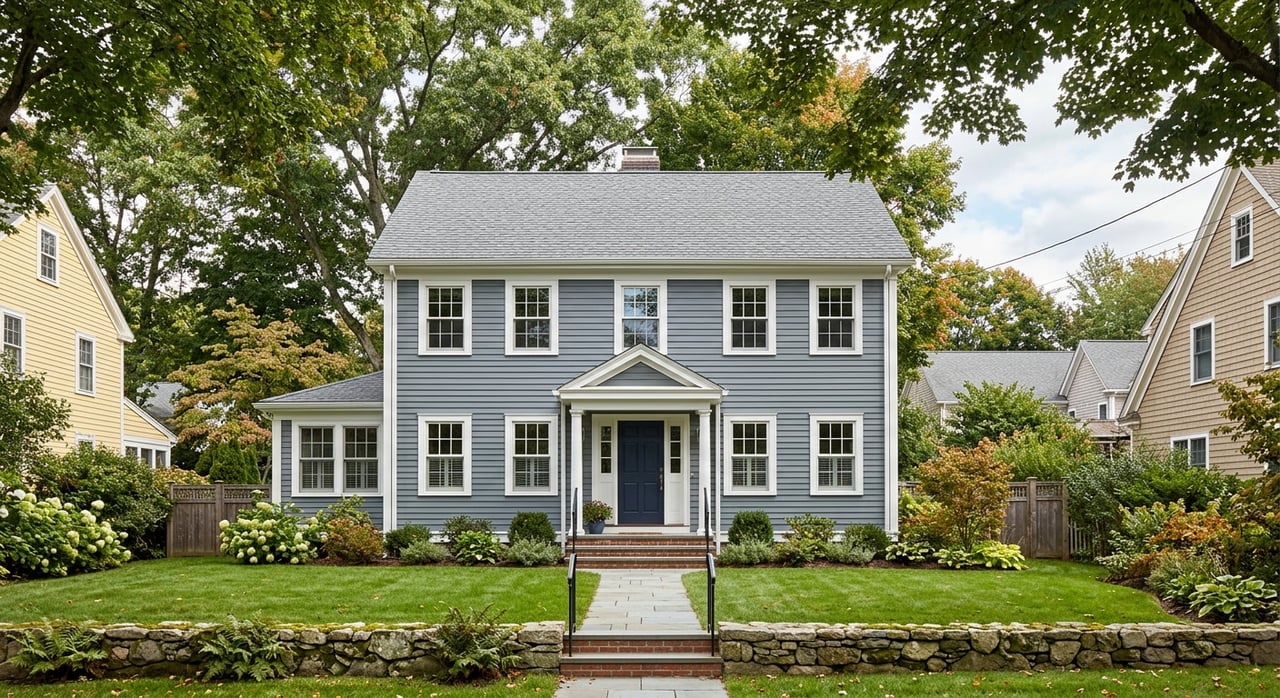
Trying to narrow down Newton can feel harder than choosing the house itself. Unlike many suburbs, Newton does not revolve around one downtown, so your day-to-day experience can change a lot from one village to the next. If you are a move-up buyer looking for more space, a better commute setup, or the right balance of village life and residential privacy, this guide will help you compare the villages that tend to matter most. Let’s dive in.
Why Newton feels different
Newton is best understood as a city of villages rather than a single-center suburb. The city identifies 13 distinct village centers, shaped over time by rail stops, major roads, and historic development patterns.
For move-up buyers, that matters because each village offers a different mix of home style, lot pattern, local shops, and transit access. In practical terms, your choice is often less about “Newton” in general and more about which village best fits how you want to live.
Start with your move-up priorities
Before comparing villages, it helps to define what “moving up” means for you. For some buyers, it is more square footage or a larger lot. For others, it is a better commute, easier errands, or a home with renovation potential.
A simple way to frame your search is to rank these priorities:
- Village-center activity and walkable errands
- Transit access by Green Line, commuter rail, or bus
- Larger lots or a more private residential feel
- Older-home character versus a more uniform suburban setting
- Renovation plans and whether historic review could affect them
Once you know your top two or three, Newton starts to make much more sense.
Newton Centre for village energy
Newton Centre is one of Newton’s largest and most active village centers. The city describes it as a town-center setting with dining, cafes, retail, civic uses, and residential or office space above street level.
If you want the strongest village-center feel in Newton, this is often the benchmark. It tends to appeal to buyers who want daily errands, dining, and transit woven into the neighborhood rather than separated from it.
Why move-up buyers choose Newton Centre
Newton Centre can work well if you want a home base that feels lively and connected. The area offers one of the broadest mixes of everyday uses in Newton, which can make daily life feel more convenient.
It is also served by the Green Line D branch, which adds to its appeal for buyers who want rail access without giving up a suburban address. If your idea of moving up includes more convenience as much as more space, Newton Centre deserves a close look.
Newtonville for classic commuter living
Newtonville grew around the railroad and developed as a classic streetcar suburb. The city describes it as mostly residential, with large detached houses on moderate-sized lots and a strong presence of Queen Anne, Colonial Revival, and related revival styles.
This village often stands out for buyers who want traditional single-family streets and historic character. It feels like a place where the residential fabric is a big part of the appeal.
Why move-up buyers choose Newtonville
If you want commuter rail access paired with classic neighborhood blocks, Newtonville offers a compelling mix. The commuter rail station is also part of a city-announced rebuild project, with construction slated to begin in 2026 and plans for elevators and accessible high-level platforms.
For buyers thinking long term, that transit upgrade is worth noting. Newtonville may be especially attractive if you want a more traditional suburban feel while still keeping Boston access in the picture.
West Newton for character and convenience
West Newton is one of Newton’s older villages and has long been tied to transportation and civic life. The city’s history describes generous lots, ornamental trees and gardens, and a range of older architectural styles including Greek Revival, Italianate, Second Empire, and Queen Anne.
For move-up buyers, West Newton often offers a strong sense of established neighborhood character. It can feel less dense and less busy than Newton Centre while still offering commuter rail convenience.
Why move-up buyers choose West Newton
West Newton makes sense if you want older-house charm and a settled residential feel. Buyers who appreciate historic housing details often find it a strong alternative to busier village centers.
It is especially practical if your commute points you toward commuter rail rather than the Green Line. If your upgrade is about character, lot presence, and rail access, West Newton belongs on your list.
Auburndale for a quieter village feel
Auburndale developed as a suburban commuter village, and its center remains relatively small in scale. The city describes local dining, banking, convenience, and service uses in one- and two-story buildings, with neighborhood patterns that vary by location.
Its setting along the Charles River helps give Auburndale a different feel from Newton’s more compact village centers. For some buyers, that looser, more residential atmosphere is exactly the point.
Why move-up buyers choose Auburndale
Auburndale can be a good fit if you want a quieter neighborhood center and a more relaxed setting. It still offers commuter rail service, which helps balance the lower-key feel with useful transit access.
If you are moving up for more breathing room rather than more activity, Auburndale may line up well with your goals. It is often a smart village to consider when you want Newton access without the energy of the largest centers.
Newton Highlands for balance
Newton Highlands is a neighborhood center with a strong local core. The city says it includes shops, eateries, general services, markets, civic uses, and office or residential space above retail.
The surrounding residential pattern changes as you move outward. Near the center, you see larger homes on compact lots, while areas toward Waban and Oak Hill become more suburban with curving streets and larger lots.
Why move-up buyers choose Newton Highlands
Newton Highlands offers a middle-ground option that many buyers appreciate. You get a real village center, but the neighborhood can become quieter and more residential as you move away from it.
Transit is also a strength here, with both Newton Highlands and Eliot served by the Green Line. If you want flexibility, local amenities, and a residential feel that can vary block by block, this village is worth a serious look.
Waban for a private residential atmosphere
Waban is one of Newton’s smallest convenience centers. The city describes a modest commercial core focused on convenience shopping, local eateries, and general services, with surrounding neighborhoods that are among the most uniform in Newton.
The street network is mostly curvilinear, and the overall feel is quiet and neighborhood-first. Open-space edges also reinforce that lower-key atmosphere.
Why move-up buyers choose Waban
Waban often appeals to buyers who want a small local center rather than a full village hub. If your move-up plan includes more privacy and a more distinctly residential setting, Waban may be one of the best matches.
It also benefits from Green Line access, which can be a real advantage for households that want transit without the busier feel of a larger commercial center. In short, Waban is often about calm, consistency, and ease.
Chestnut Hill for larger lots
Chestnut Hill developed later than much of Newton and began as a landscape of country estates. The city describes large homes, lushly landscaped lots, and winding streets that respond to the natural terrain.
Its commercial side is different from the compact village-center model. Newton classifies Chestnut Hill as a retail and service cluster tied to Route 9, with larger-footprint commercial uses and parking on each property.
Why move-up buyers choose Chestnut Hill
Chestnut Hill can be a strong fit if you want larger-lot suburban living and are comfortable with a more regional retail environment. The appeal here is often less about a walkable village center and more about lot size, setting, and residential presence.
The area is also served by Green Line stops, which adds a transit option to a village known for larger-scale housing. If moving up means prioritizing space and an estate-like setting, Chestnut Hill may stand apart from the rest of Newton.
Transit can shape your shortlist
One of Newton’s biggest advantages is that several villages offer meaningful rail access. Green Line service includes Riverside, Woodland, Waban, Eliot, Newton Highlands, Newton Centre, and Chestnut Hill. Commuter rail serves Auburndale, West Newton, and Newtonville.
The city also lists bus routes connecting Newton villages to places such as Watertown, Kenmore, Needham, Back Bay, Downtown Boston, Belmont, Waltham, and Riverside. For many move-up buyers, this creates more flexibility than you find in many suburban markets.
A practical transit lens
If your household relies heavily on Green Line access, Newton Centre, Newton Highlands, Waban, and Chestnut Hill may rise to the top. If commuter rail is more relevant, Newtonville, West Newton, and Auburndale deserve extra attention.
The city is also advancing commuter rail accessibility improvements in Auburndale, West Newton, and Newtonville. That may matter if you are thinking about long-term convenience and future station access.
Historic districts and renovation plans
If you are buying a move-up home with plans to renovate, do not stop at floor plan and lot size. Newton has four Local Historic Districts: Auburndale, Chestnut Hill, Newton Upper Falls, and Newtonville.
According to the city, these districts review exterior alterations to help keep changes compatible with district character. Just as important, the district does not necessarily cover the entire village, so the specific address matters.
What buyers should check early
If you are considering additions, visible exterior changes, new windows, siding, or roof changes, ask early whether the home is in a Local Historic District. This is not necessarily a reason to rule out a property, but it can affect timeline, design choices, and planning.
For move-up buyers who want to personalize a house, this is one of those details that is easy to miss and important to understand up front. A thoughtful village search should include both lifestyle fit and project fit.
A quick village match guide
If you want to simplify the shortlist, this high-level view can help:
- Newton Centre: Best for the most active village-center lifestyle
- Newtonville: Strong fit for classic rail-oriented single-family streets and historic character
- West Newton: Good for older-house charm, generous residential fabric, and commuter rail access
- Auburndale: A quieter village option with a looser, river-adjacent feel
- Newton Highlands: A balanced choice with a real center and strong transit access
- Waban: Best for a quieter, more private residential atmosphere
- Chestnut Hill: Best for larger lots and a more estate-like setting
The right answer depends on how you define your next chapter. For some buyers, the best move-up home is the one with the liveliest village outside the front door. For others, it is the one that gives you more space, a calmer setting, or a smoother commute.
If you are weighing Newton villages and want practical guidance on home fit, renovation considerations, and the tradeoffs between location, transit, and housing style, Bell Property Partners can help you make a confident move.
FAQs
Which Newton village is best for a lively town-center feel?
- Newton Centre is the strongest fit if you want one of Newton’s largest and most vibrant village centers with dining, cafes, retail, civic uses, and Green Line access.
Which Newton villages have commuter rail service for buyers?
- Auburndale, West Newton, and Newtonville have commuter rail service, and the city is advancing accessibility improvements for those stations.
Which Newton village is best for a quieter residential setting?
- Waban is often the strongest match for buyers who want a small local center and a more private, neighborhood-first atmosphere.
What should move-up buyers know about historic districts in Newton?
- Newton has Local Historic Districts in Auburndale, Chestnut Hill, Newton Upper Falls, and Newtonville, and exterior changes in those districts may be subject to review.
Which Newton village offers larger lots for move-up buyers?
- Chestnut Hill is the clearest fit if you want larger homes, lushly landscaped lots, and a more estate-like residential setting.
How should buyers compare Newton villages practically?
- Start by ranking your priorities such as transit, village activity, lot size, home character, and renovation plans, then match those priorities to the village that best supports your day-to-day lifestyle.