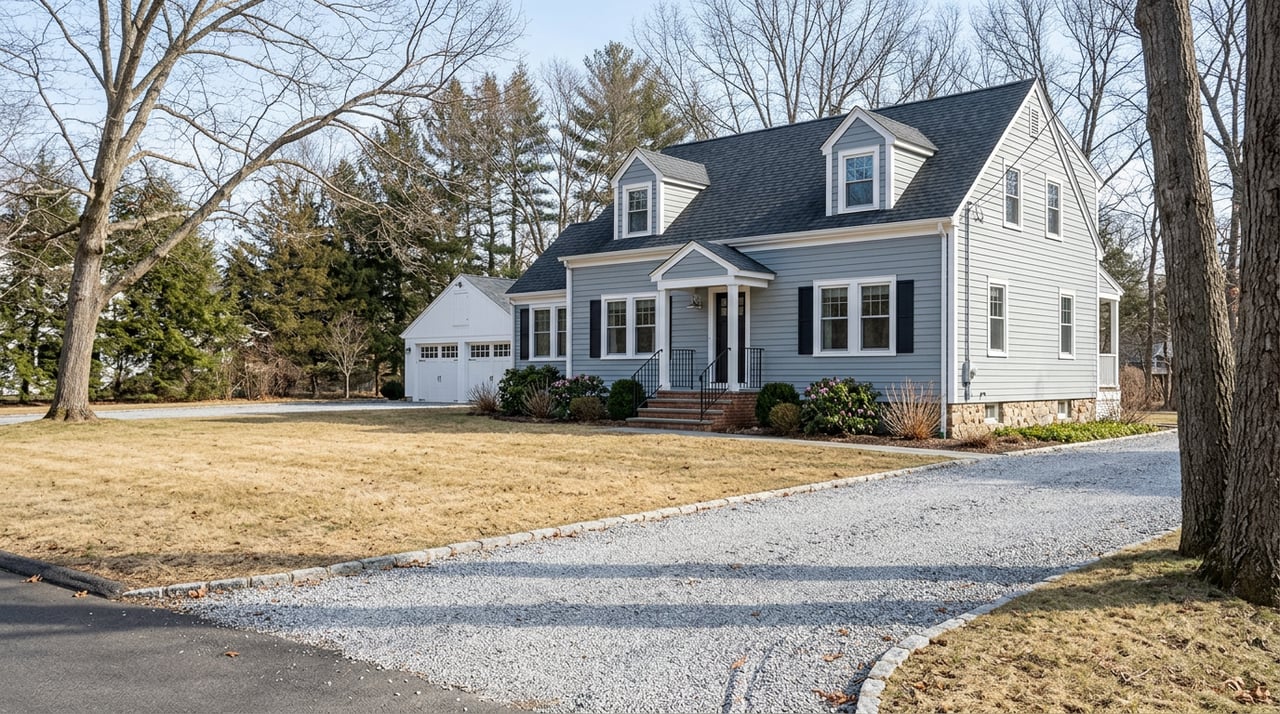
If you love quiet roads, stone walls, and room to breathe, Dover may be calling your name. You get a true country setting without losing access to Boston and the MetroWest job centers. In this guide, you’ll learn what shapes Dover’s landscape, how zoning protects its rural feel, what home styles you’ll find, and what to consider if you plan to buy or sell. Let’s dive in.
Where Dover’s country feel comes from
Dover is a small town of roughly 5,900 people set about 15 miles southwest of Boston. The town covers about 15.1 square miles, and it is described by the town itself as predominately residential with a peaceful rural setting and many scenic roads. You see long setbacks, wooded lots, and conserved open space all around. That combination creates a rare sense of privacy so close to the city.
For a quick profile of the town’s size and population, review the town overview and population data from the Town of Dover and Census Reporter. The core takeaway is simple. Dover is intentionally low density and it shows in the way properties look and live.
- Learn more about Dover’s character on the town’s About page: peaceful rural setting and scenic roads.
- See population and area context on Census Reporter’s Dover profile.
Lot sizes and zoning shape every property
Dover’s residential zoning is one of the clearest reasons the town feels like the country. The town maintains 1/2‑acre, 1‑acre, and 2‑acre residential zones, and it enforces a “perfect square” buildable‑area rule tied to frontage. That means homes are sited with real separation, room for yards, and, on many parcels, space for outbuildings or long drives.
Most of the town’s buildable land falls in the 1‑acre and 2‑acre categories, which concentrates the housing stock in single‑family properties with substantial buffers. That structure keeps density low and protects the wooded, open look that buyers prize. You can confirm the rule set in the town’s planning FAQs.
- Read the Planning Board FAQs on zoning districts and the buildable‑area rule.
Home styles you will find
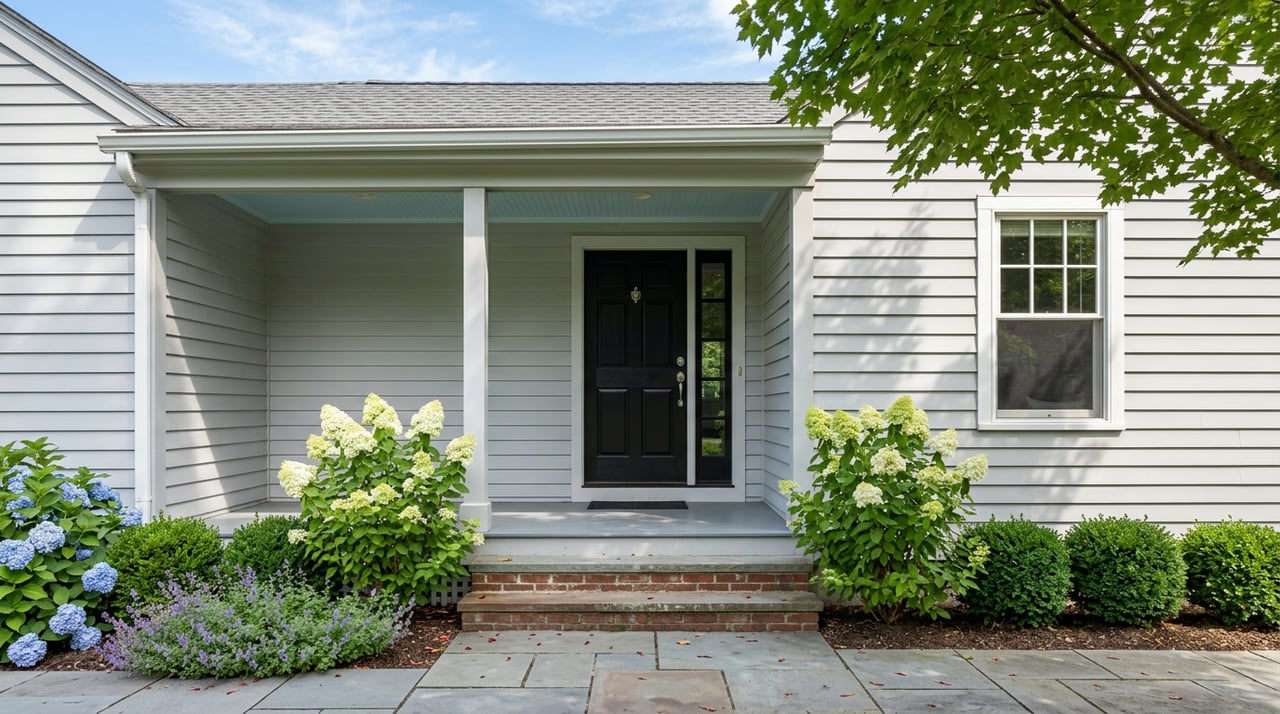
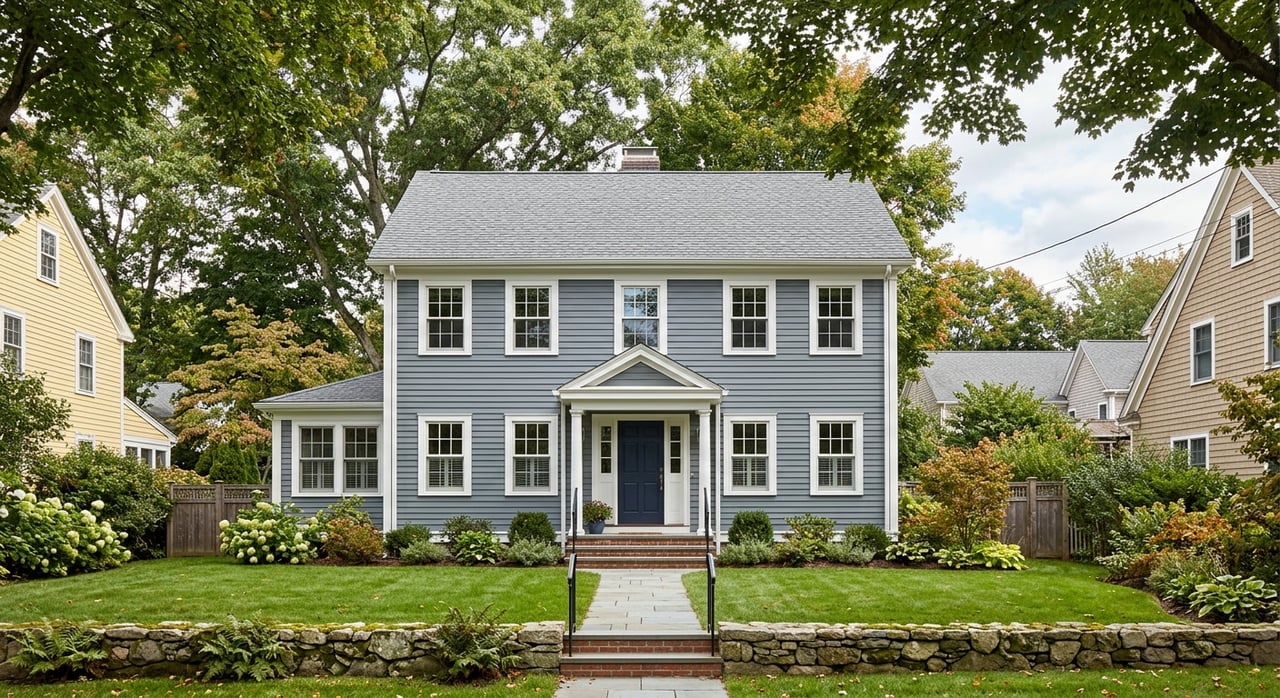
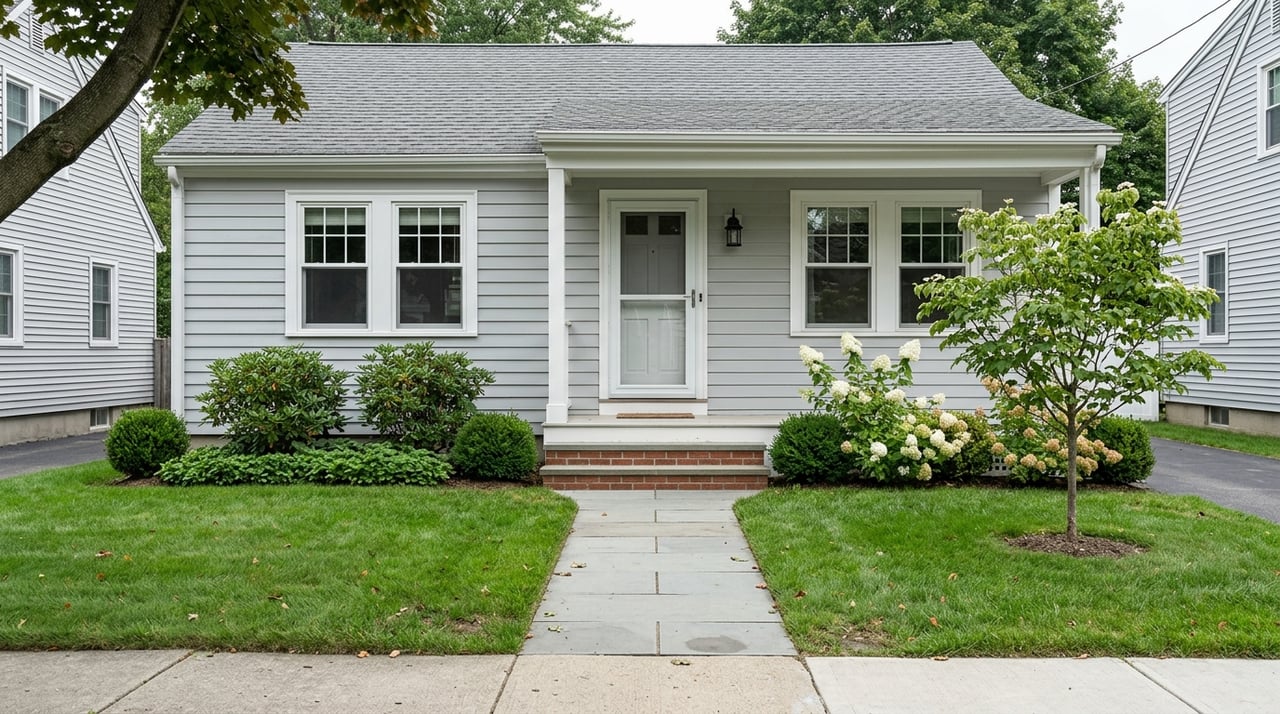
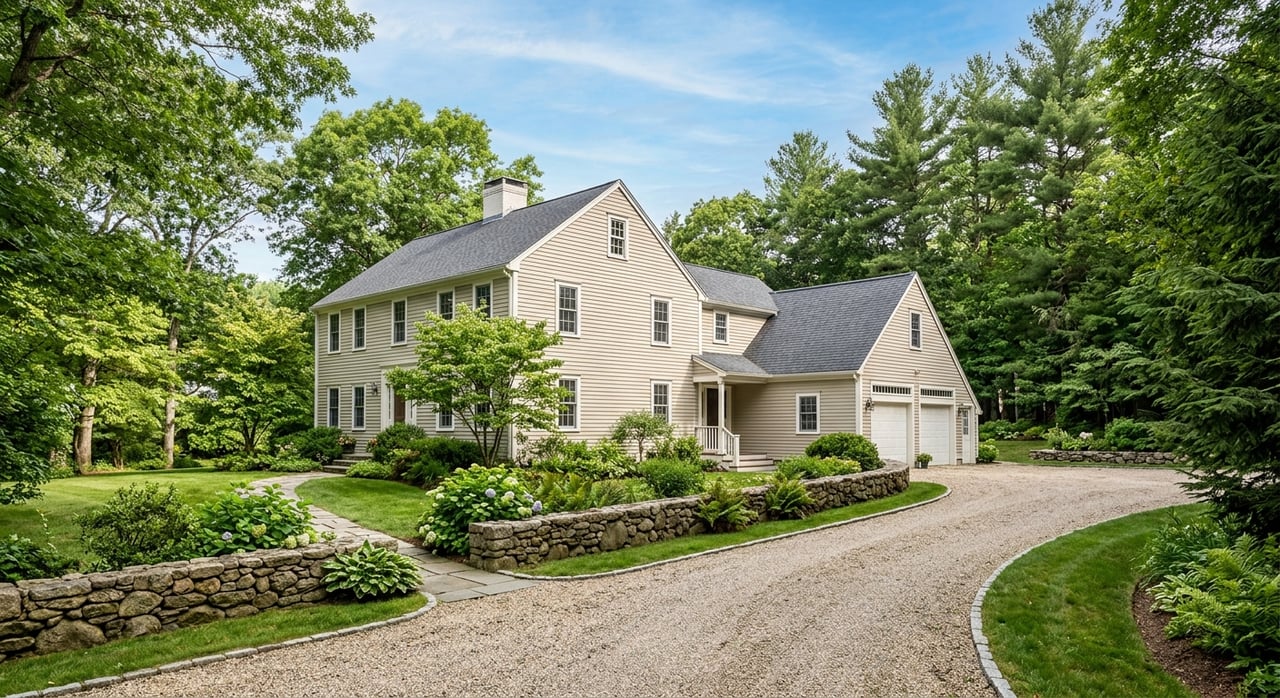
You will see a blend of historic New England farmhouses and colonials alongside larger estate‑style homes and thoughtful new construction. Many properties feature stone walls, mature tree lines, and, in some cases, paddocks or small stables. It is common to find parcels that back up to preserved land or trail networks.
Two nearby open‑space anchors highlight the landscape you live next to. Noanet Woodlands offers nearly 600 acres of trails and woodland. Powisset Farm pairs open fields with an active farm setting and public programs. Homes near these areas often enjoy a quiet, private backdrop.
- Explore Noanet Woodlands.
- See the farm and fields at Powisset Farm.
Trails, fields, and equestrian access
Outdoor access is a core part of Dover’s appeal. Noanet and Powisset create a large, contiguous open‑space block with miles of walking trails and historic bridle paths. It is a popular area for hiking, horseback riding, and winter cross‑country skiing.
The town’s Conservation Commission also stewards hundreds of acres of town‑owned conservation land. Many residential parcels abut these protected areas, which helps preserve sightlines and a sense of calm around homes.
- Review Dover’s Conservation Commission for maps, acreage, and permitting info.
Commute, transit, and infrastructure
Dover does not have MBTA rail or subway service within its borders. Most residents commute by car, and the town estimates about a 40‑minute drive to downtown Boston under typical conditions. If you rely on transit, you will likely drive to a commuter‑rail station in a neighboring town.
Because Dover is low density, many homes use private wells and on‑site septic systems. The town notes that its work to comply with the state’s MBTA Communities Act does not obligate any extension of public sewer or water. As a buyer, you should ask about Title V status, septic capacity, well details, and any available public utilities at a specific address.
- See the town’s summary of MBTA Communities and local context.
Market context in plain English
Dover sits near the top of MetroWest single‑family prices, and the range is wide. Recent snapshots from major data providers show typical prices between roughly 1.6 million and 2.2 million dollars as of late 2025 through early 2026. Keep in mind that Dover has very low monthly inventory, so a few sales can swing monthly averages.
What drives variation? Acreage, finished square footage, renovation quality, and proximity to conserved land tend to move the needle more than broad town averages. If you are pricing a home or evaluating value as a buyer, look at recent solds with similar lot characteristics and improvements, and note the dates.
What to look for as a buyer
When you tour Dover, focus on property‑specific details that shape daily living and long‑term costs.
- Lot and setting. Confirm acreage, setbacks, and how the home sits on the land. Adjacency to conservation land or trail networks can add to privacy and enjoyment.
- Systems and infrastructure. Ask about septic age and capacity, Title V status, well production and water quality, and any available public utilities at the street.
- Site constraints. Wetlands and local bylaws may affect future additions, pools, barns, or accessory structures. Speak with the Conservation Commission and Board of Health early if you plan changes. Start with the town’s Conservation Commission page for guidance.
- Access and maintenance. Long driveways, private roads, or shared drives bring recurring snow and maintenance responsibilities. Plan for landscaping on larger grounds.
- Outdoor living potential. Many parcels are ideal for gardens, sport courts, or small equestrian uses where permitted. Confirm zoning and any conservation restrictions before you invest.
How to position your Dover listing
To stand out in a low‑inventory, high‑dispersion market, you want to lean into what makes your property uniquely Dover.
- Lead with the land. Highlight acreage, orientation, stone walls, tree canopy, and buffers. If applicable, call out connections to Noanet or Powisset trails.
- Elevate renovation quality. Buyers compare kitchens, baths, systems, and windows carefully. Clear documentation of recent work inspires confidence.
- Clarify systems and site. Proactively share Title V reports, well data, and any wetlands or conservation details so buyers feel informed.
- Present a lifestyle. Use professional photography, video, aerial context, and a property narrative to show how the home and land live together.
If you want help getting market‑ready, our team pairs premium presentation with a strategic prep plan. We leverage Compass tools, including Concierge, and our three‑phased marketing approach to fund, manage, and showcase improvements that can maximize your net proceeds.
Is change coming? The MBTA overlay in brief
Dover has advanced a narrowly drawn multifamily overlay to meet the Commonwealth’s MBTA Communities requirement. The overlay is limited to specific locations and includes its own dimensional rules. A draft document referenced a 20,000 square foot minimum lot size for projects within the overlay.
This is a localized change. The town’s larger residential fabric remains in its existing 1/2‑acre, 1‑acre, and 2‑acre districts, which continue to preserve a low‑density, country setting.
- Read the town’s overview of the MBTA Communities process.
- See the draft dimensional table in the zoning amendment packet.
The Dover‑Sherborn school factor
Dover is part of the Dover‑Sherborn Regional School District. Public reporting regularly places Dover‑Sherborn High School among the higher performing schools in Massachusetts. If schools are a factor for you, review current rankings directly and confirm details with the district.
- Check statewide rankings on the archived US News Massachusetts high school list.
Ready to explore Dover?
Dover offers a rare blend. You get a true country landscape, real privacy, and miles of protected open space, yet you remain within reach of Boston and the MetroWest corridor. If you are weighing a purchase or planning a sale, a focused strategy around land, systems, and presentation will help you move with confidence.
Thinking about next steps? Connect with Bell Property Partners for data‑driven pricing, premium marketing, and hands‑on guidance tailored to Dover’s country properties.
FAQs
How big are lots in Dover?
- Dover maintains 1/2‑acre, 1‑acre, and 2‑acre residential zones, with much of the town favoring 1‑acre or larger lots. See the town’s zoning FAQs to confirm an address.
What types of homes will I find in Dover?
- You will see a mix of historic farmhouses and colonials, larger estate‑style homes, and custom new builds, often with stone walls, long drives, and wooded buffers. For landscape context, explore Noanet Woodlands and Powisset Farm.
Is Dover a good location for Boston commuters?
- Dover is primarily car‑commuter oriented and does not have MBTA service inside town. The town lists about a 40‑minute drive to downtown under typical conditions, and many residents use commuter‑rail stations in nearby towns. See the MBTA Communities page for context.
Are there trails or places to ride horses in Dover?
- Yes. Noanet Woodlands and Powisset Farm offer miles of trails and historic bridle paths, and the town also stewards hundreds of acres of conservation land. Start with the Conservation Commission and The Trustees’ pages for maps and programs.
How expensive is Dover compared with nearby towns?
- Dover is typically at the higher end of MetroWest single‑family pricing, with recent snapshots from major providers ranging from about 1.6 to 2.2 million dollars in late 2025 to early 2026. Always check current data and recent comparable sales before making decisions.